Collection: Router Bits - Convex and Concave
🛠️ Professional Router Bit Collection: Convex and Concave (Rounding and Grooving)
Transform any rough edge into a professionally finished detail. Whether you want to "break the edge" of a shelf or carve decorative channels on a cabinet front, this collection covers all curved profiling needs in wood, particleboard, or MDF.
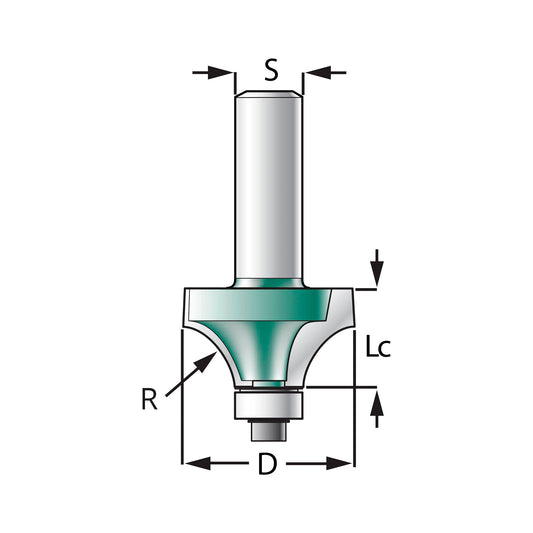
1. Edge Rounding Bits (Concave Profile) – "Roundover Bits"
These are essential in any workshop for finishing edges. Since the cutting edge is curved inwards (concave), the result on the wood is a perfectly rounded (convex) edge.
-
Popular names: Roundover bit, Radius bit, Edge rounding bit.
-
Bearing Guide: Our models come equipped with a guide bearing (at the tip), allowing you to work directly on the edge of the workpiece, even on curved shapes (round tables, arches), without using a guide fence.
-
Usage: Table tops, stair treads, chair armrests, or mirror frames. Provides a smooth touch and prevents edge chipping over time.
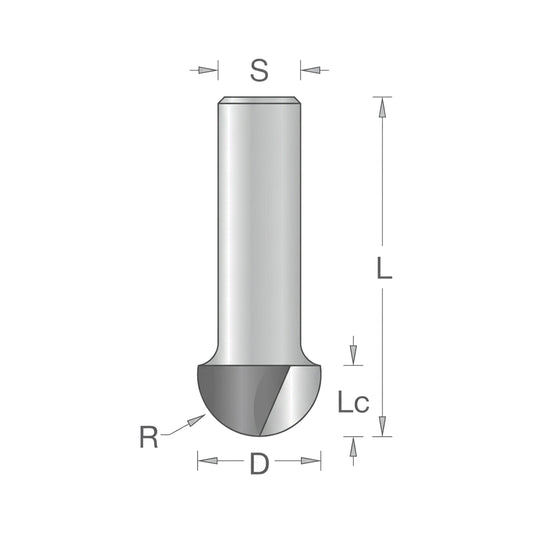
2. Grooving / Round Channel Bits (Convex Profile) – "Core Box Bits"
Unlike edge bits, these are designed to penetrate the wood mass and leave a semicircular groove behind.
-
Popular names: U-groove bit, Grooving bit, Round grooving bit, Core Box bit.
-
Precision and Design: The convex cutting edge carves perfect channels. They are usually used without a bearing, with guiding provided by the router table fence or a template.
-
Usage: Juice grooves for cutting boards, decorative fluting on posts or table legs, "invisible" handles routed directly into drawers, or cable management channels.
💎 Why choose our router bits?
-
Carbide Tips (CMS): High-quality carbide cutting edges for extended tool life and "burn-free" cuts.
-
Dynamic Balancing: Each bit is tested to eliminate vibrations, thus protecting the bearings of your router.
-
Range of Sizes: Available with shank (shaft) sizes of 6mm, 8mm, or 12mm, to fit any type of manual router or CNC machine.
Craftsman's Tip: For a mirror finish, we recommend two passes: the first for rough material removal, and the second, very fine, for final smoothing.