


Router Bit for Wooden Panels D160 - D200 | Profile Code - M012-13 | DS Steel
Router Bit for Wooden Panels D160 - D200 | Profile Code - M012-13 | DS Steel
SKU:M012-63L-d32
Low stock: 1 left
Couldn't load pickup availability
Raised Panel Cutter – DS Steel | DIY
Profiled cutter for creating raised panels on a stationary router table. Frequently used in the production of solid wood doors (central panel), furniture with raised panels (cabinet fronts, drawers, interior doors with decorative panels). Available in two model positioning options – above the wood or below the wood – selectable directly from the product page.
| Product Type | Product TypeProfiled cutter for making movable panels |
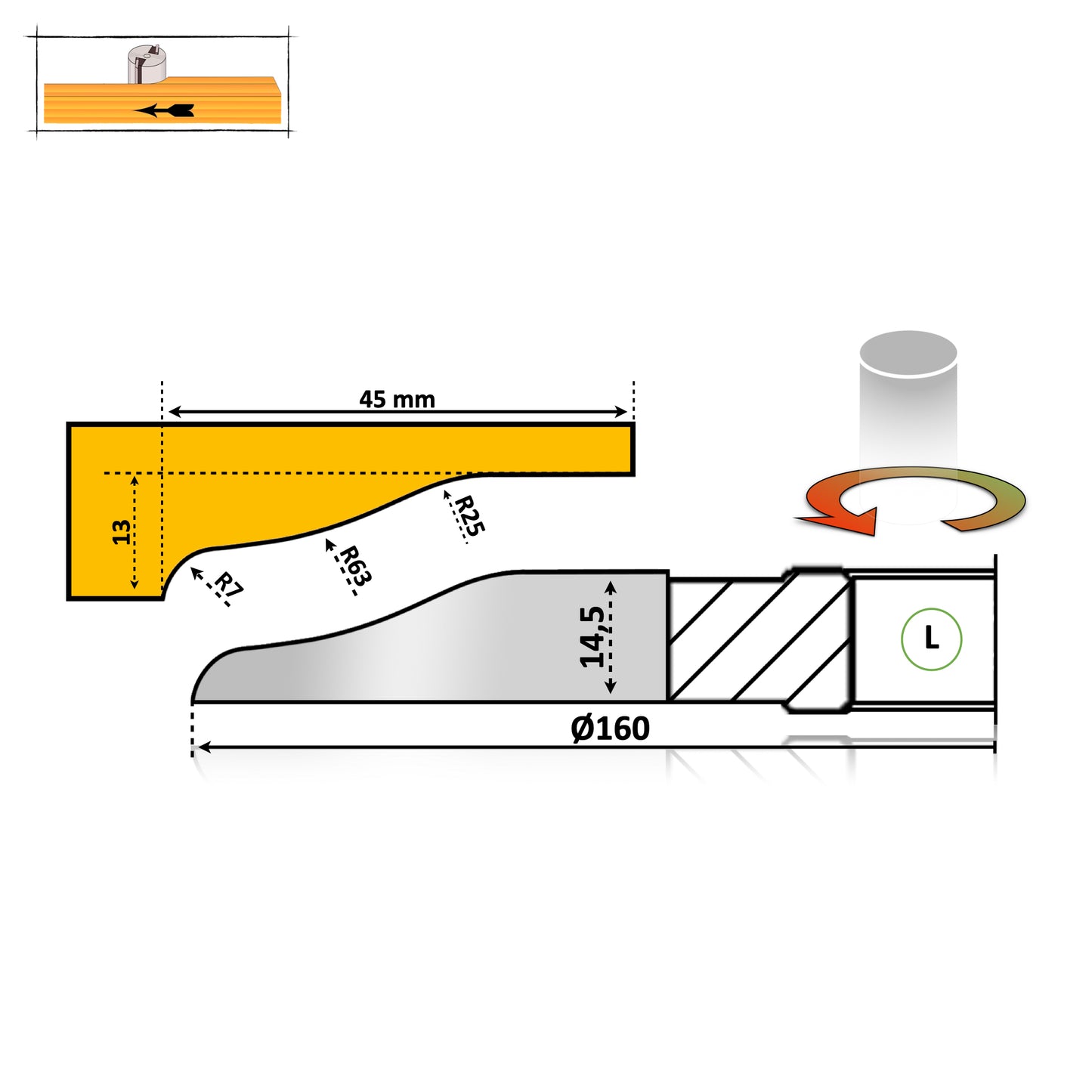
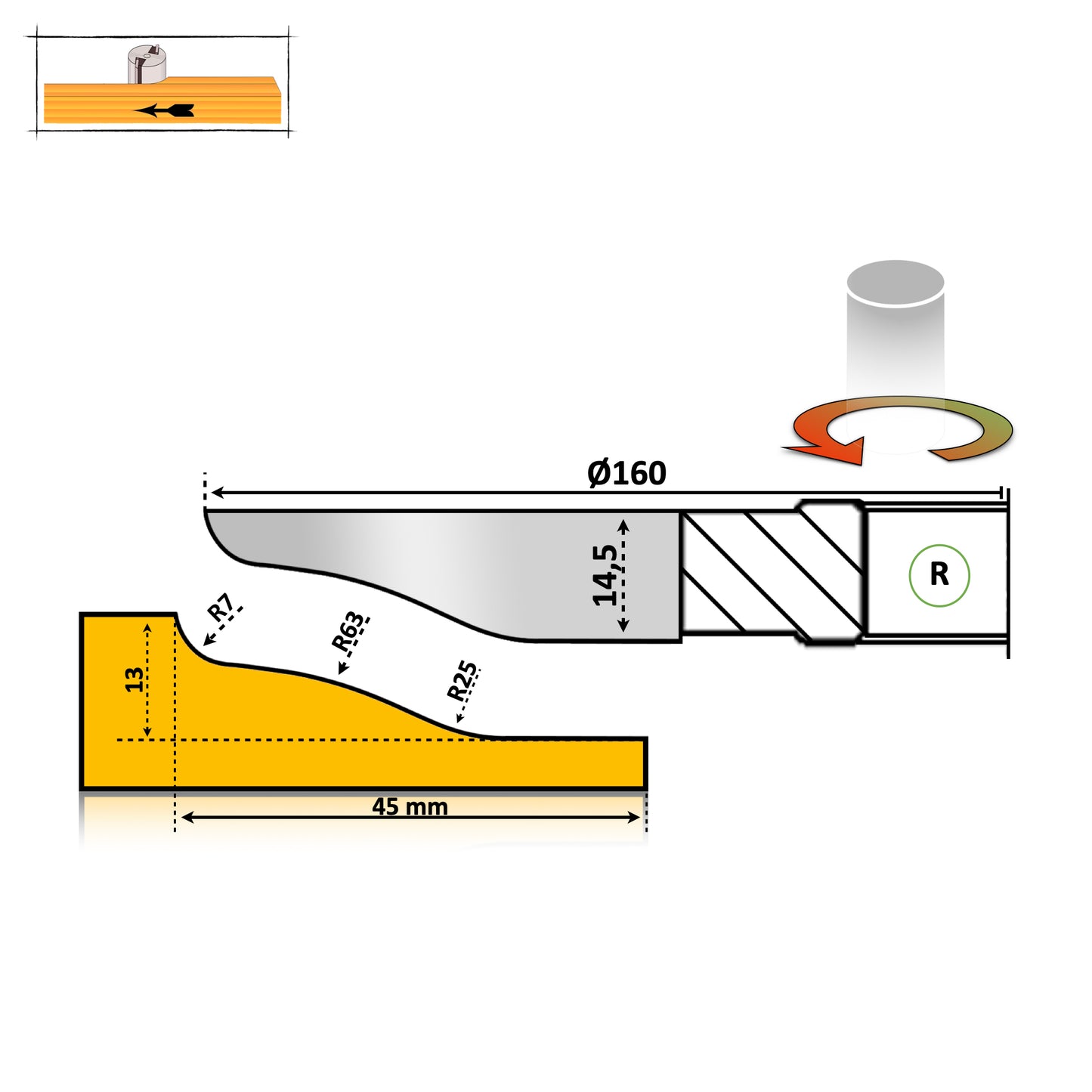
| Milling Profile | Milling ProfileClassic/traditional model – see attached technical drawing |
| Model Positioning Options | Model Positioning OptionsSelect from menu: above the wood OR below the wood option |
| Cutting Edge Material | Cutting Edge MaterialDS Steel (standard high-speed steel) |
| Outer Diameter (D) | Outer Diameter (D)160 mm or 200 mm – select from menu |
| Active Working Space | Active Working SpaceSee attached technical drawing |
| Number of Teeth / Cutting Edges | Number of Teeth / Cutting EdgesZ4 (4 active, brazed, profiled inserts) |
| Construction Type | Construction TypeBrazed inserts with brass alloy (Cu-Zn), resharpenable, without disassembly |
| Bore Diameter (d) | Bore Diameter (d)Ø32 mm standard | Ø30 mm – reduction bush not included, purchased separately | Ø35 mm or Ø40 mm available for pre-order |
| Recommended RPM | Recommended RPM6,000 RPM |
| Estimated Yield | Estimated YieldUp to 3,000 linear meters in soft wood (between resharpening cycles) |
| Package Contents | Package Contents1 x Cutter (option selected from menu) |
| Country of Origin | Country of OriginUkraine |
🚀 PROPERTIES AND PERFORMANCE:
- Robust and Balanced Body: Made of heat-treated steel, the tool body eliminates vibrations, protecting machine bearings and ensuring smooth finishes.
- Professional Z4 Configuration: The 4 active cutting edges evenly distribute the cutting effort, allowing for constant feed without material tearing, even in areas with knots.
- Durable Brazing: Inserts are fixed with brass alloy (Cu-Zn), which withstands high torsional forces during deep profiling.
- Resharpenable: The generous tooth profile allows for repeated resharpening, reducing long-term maintenance costs.
- Dual Model Orientation: Choosing the "above" or "below the wood" option allows adaptation to the type of machine and preferred working method.
💡 How to choose the model orientation:
– Above the wood – visually control the profile during milling; recommended for manual work with controlled overhead feed.
– Below the wood – sawdust and chips are thrown directly downwards; the finish of the workpiece remains protected while sliding on the router table.
⚠️ USAGE LIMITATIONS (DS STEEL):
- Purpose: Recommended exclusively for natural solid wood of soft or medium density.
- Not Recommended for Composites: ❌ NOT recommended for use on chipboard, MDF, HDF, exotic wood, or derivative panels with abrasive adhesive!
- Hardwood (oak, beech): The wear of the DS Steel cutting edge is significantly faster than on softwoods — resharpening will be more frequent.
📊 COMPATIBILITY GRADE BY MATERIAL TYPE (DS STEEL)
🦺 SAFETY MEASURES IN USE:
- Mandatory protective equipment: safety glasses (against projected chips), mask or respirator filter (fine wood dust), and ear protection for prolonged work.
- Beware of hands and fingers: always use a feed/push device; do not guide the workpiece manually with hands near the cutter.
- Check the cutter orientation before starting the machine – the "above" and "below the wood" options are not interchangeable; incorrect mounting produces an incorrect profile.
- Check the fixation of the cutter on the spindle and the full tightening of the nut before starting.
- Observe the recommended speed of 6,000 RPM – exceeding it increases the risk of vibrations and cutting edge damage.
Share

Da se încadrează la descriere