1
/
of
1
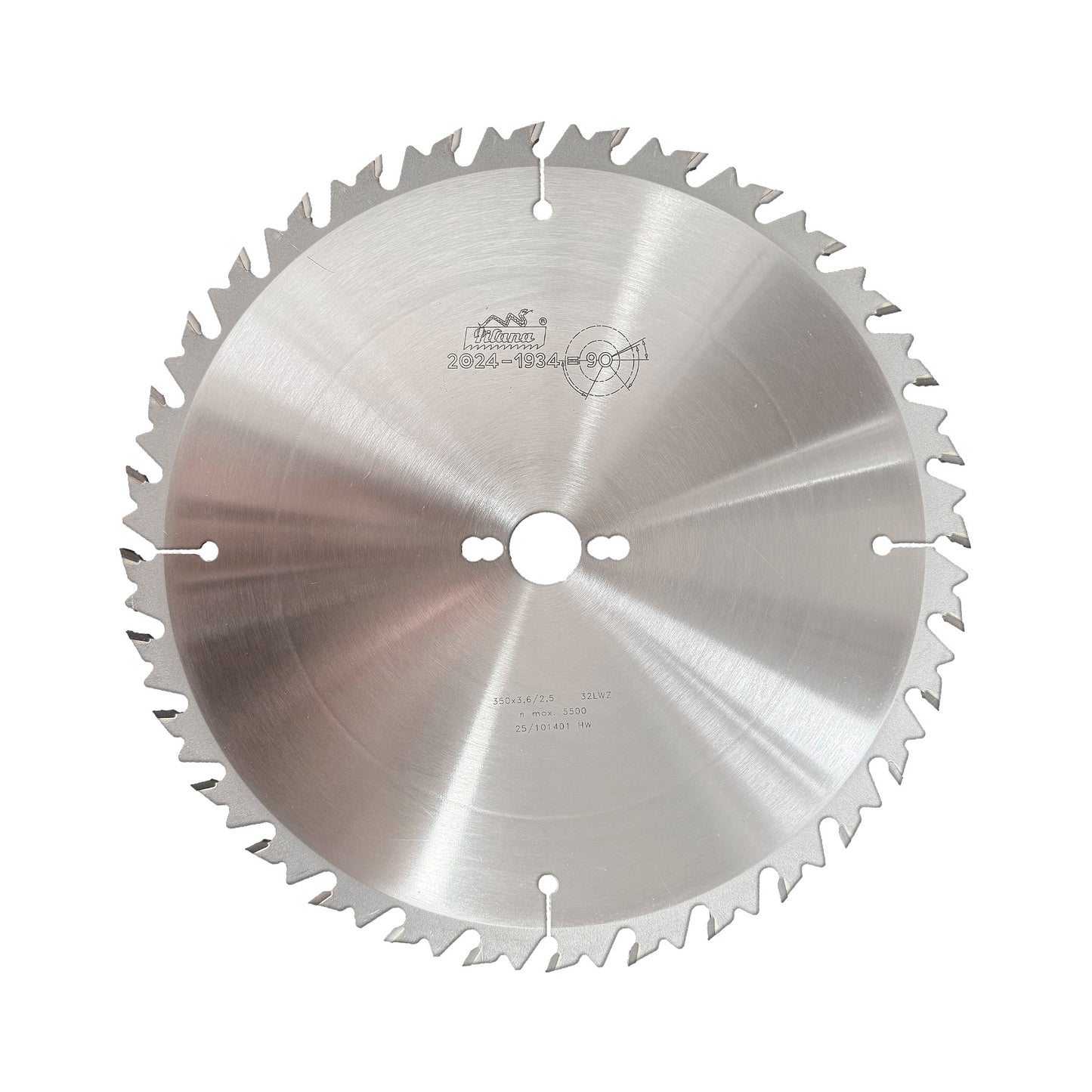
Circular Saw Blade for Ripping Wood Pilana 350*30 mm - 32 Teeth LWZ
Circular Saw Blade for Ripping Wood Pilana 350*30 mm - 32 Teeth LWZ
No reviews
SKU:P-350*3.6/2.5*30x32LWZ
Regular price
410,00 RON
Regular price
Sale price
410,00 RON
Taxes included.
Shipping calculated at checkout.
Quantity
Available for Pre-order
Couldn't load pickup availability
T.C.T. Circular Saw Blade 350 mm for Rip Cuts – Solid Wood
Professional T.C.T. (Carbide) blade with LWZ tooth geometry (32 teeth), designed for rip cuts (along the grain) in solid wood. The LWZ tooth configuration combines high feed rates with a stable and precise cutting line, even on thick beams or hardwoods. Ideal for professional woodworking shops, sawmills, and industrial table saws operating under intensive conditions.
| Outer Diameter (D) | Outer Diameter (D)350 mm |
| Kerf / Plate Thickness | Kerf / Plate Thickness3.6 mm / 2.5 mm |
| Bore (d) | Bore (d)30 mm | for a different arbor diameter, please contact us before ordering |
| Number of Teeth | Number of Teeth32Z |
| Tooth Geometry | Tooth GeometryLWZ – combination of flat and alternate teeth, optimized for precise ripping |
| Cutting Material | Cutting MaterialT.C.T. Carbide, brazed onto steel body |
| Primary Cut Type | Primary Cut TypeRip (longitudinal) – LWZ geometry is optimized for this direction |
| Maximum Permissible Speed | Maximum Permissible SpeedAs marked on the blade body – do not exceed the indicated speed |
| Applications | ApplicationsSawmills, table saws, industrial cutting machines – lumber, beams, planks, solid wood under intensive use |
| Package Contents | Package Contents1 x Circular saw blade |
🚀 WHY LWZ FOR RIPPING:
- LWZ Geometry: combines flat top (FZ) and alternate top bevel (WZ) tooth elements, offering both high feed rates and a cleaner cut than a purely FZ blade – a clear advantage over classic rip blades.
- 32 Teeth – Balance between Speed and Precision: more teeth than an FZ blade with 24Z, meaning a finer cut while maintaining fast feed.
- Efficient Chip Evacuation: the gullets between the teeth are calculated to quickly remove sawdust from the cut, preventing clogging and overheating.
- T.C.T. Carbide: high resistance to wear from hard fibers, extended lifespan compared to high-speed steel blades, even on intensively processed hardwoods.
- Stable Cut on Thick Beams: the 2.5 mm plate and 3.6 mm kerf provide sufficient rigidity to maintain a straight line in long workpieces.
⚠️ USAGE LIMITATIONS:
- Not suitable for cross-cutting: LWZ geometry cuts efficiently along the grain but leaves a rough cut when cross-cutting – use a WZ blade for cross-cuts.
- Particleboard / MDF / HDF / Melamine: ❌ not recommended – not designed for engineered wood panels; the abrasive binder prematurely wears the cutting edge.
- Constant feed mandatory: stopping the rotating blade in hard wood generates excessive heat and can cause burns or deformation of the cut.
📊 COMPATIBILITY RATING BY MATERIAL TYPE (LWZ 32Z)
Softwood – Ripping (Spruce, Fir, Pine)
100%
Excellent: fast feed, clean and stable cut along the grain, no clogging.
Hardwood – Ripping (Oak, Beech, Ash)
90%
Very good: stable cutting line, requires constant feed to avoid overheating.
Cross-cutting
Unsuitable
Rough cut when cross-cutting – use a WZ blade for cross-cuts.
Particleboard / MDF / HDF / Laminate
Not Recommended
Not designed for engineered panels – abrasive binder prematurely wears the cutting edge.
🦺 SAFETY MEASURES FOR USE:
- Mandatory personal protective equipment: safety glasses, dust mask or respirator, ear protection, and cut-resistant gloves when handling the blade.
- Beware of kickback: the main danger when ripping. Ensure the splitter (riving knife) is correctly installed behind the blade – it prevents the wood from binding and violent kickback.
- Maintain constant feed: do not stop the rotating blade in the same spot – it generates excessive heat, burns, and can cause deformation of the blade body.
- Secure the rip fence correctly relative to the blade before ripping – a misaligned fence causes kickback or a crooked cut.
- Check the rotation direction during installation – the teeth must cut in the correct direction relative to the material's feed direction.
- Do not exceed the maximum permissible speed marked on the blade body.
- Do not use blades with cracked or missing teeth, or a deformed body – replace damaged blades immediately.
Share